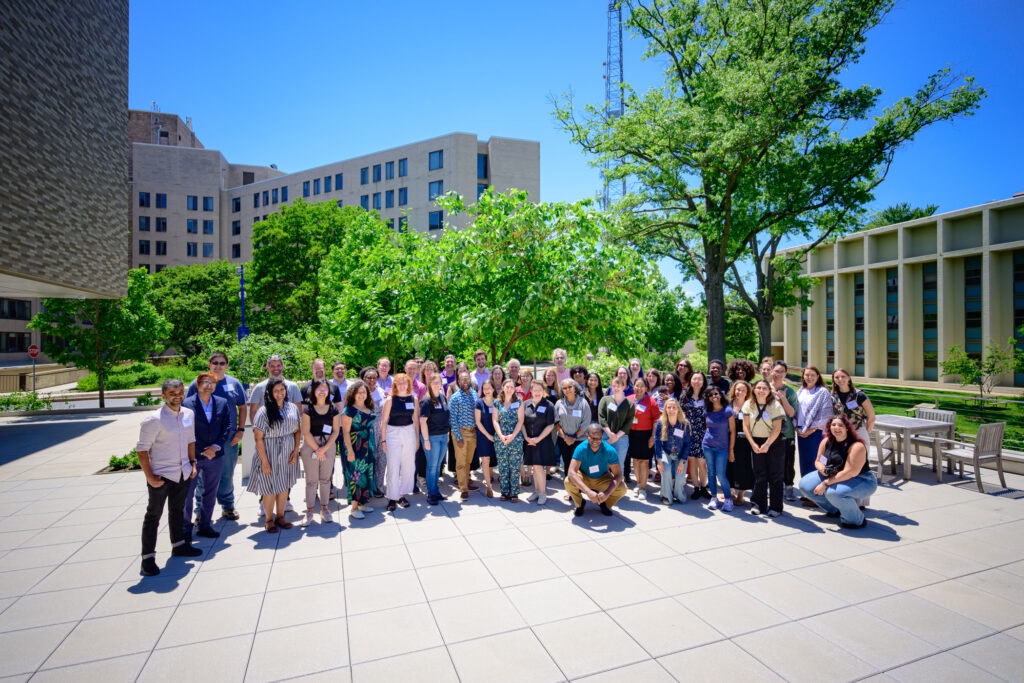
We’re celebrating 4 years of collaboration, innovation, and impact across the RECIPES Network! This year, we’ve worked alongside 155 incredible contributors: 82 students, 38 faculty, 20 staff, and 5 postdoctoral fellows. Together, we’re co-creating knowledge that will transform our food systems to be more resilient, equitable, and sustainable.
Our Focus this Year
We built on the foundation of our first three years by expanding and evaluating our research and educational activities. We fostered new collaborations across sectors and further broke down disciplinary silos.
| We collaborated on 45 projects, tackling a range of topics that affect policymakers to corporations to individual consumers. We released 25 peer-reviewed publications, turning research into action. And we shared our work at 19 conferences, amplifying food systems knowledge across disciplines and communities. |
Educational Resources

Food-Fueled Undergraduate Food Systems Science Journal
Volume II is now out! We invite submissions from undergraduate and high school students. View the submission guidelines and submit your work here.
‘Food for Thought: Why Waste’ Undergraduate Academic Course
Our inquiry-based course on wasted food is now publicly available online on Canvas Commons! Piloted at American University, Johns Hopkins University, and Rochester Institute of Technology starting in Fall 2023, the course invites students to explore sustainability, social justice, and convergence research through the lens of wasted food. It’s designed to spark curiosity, inspire solutions, and “plant the seed” for future careers in food systems.
Our 3 Research Goals
1: How do we measure and understand the complexities of wasted food?
- We’ve continued our Household Food Waste Tracking Survey, with three waves of data collection this year and new questions on food price inflation and anti-obesity medications.
- We assessed food quality variation in rescued and redistributed retail food (using New York as a case study), revealing that donor motives often outweigh recipient needs.
- We advanced the FoodImage app to track food waste during preparation, consumption, and disposal.
2: What solutions work – and where?
- We completed 24 waste audits in K-12 schools and implemented share tables and composting programs in 12 cafeterias. Share tables and recovery were the topic of our September webinar! Read about some of our other cafeteria research here.
- We finalized a clustering method and indicators to build the first regional typology framework for wasted food–spanning urban-rural divides, infrastructure, governance, and more.
- We published an open-source code for a new modeling framework that evaluates sustainability, resilience, and equity of wasted food solutions. Read more here.
3: How do we co-create knowledge across sectors?
- We published multi-year research with Chicago stakeholders and deepened partnerships with city government, corporate, and community-based collaborators.
- We investigated responses to California’s Senate Bill 1383 organic waste diversion requirements.
- Researchers explored how DC, Maryland, and Virginia restaurants and chefs are minimizing wasted food in their kitchens.
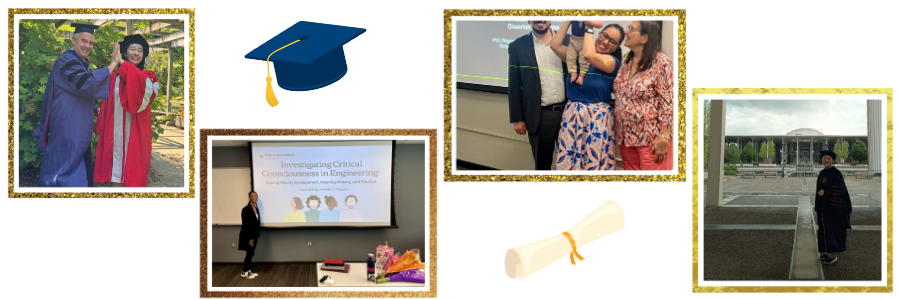
A huge congratulations to all graduates and those starting new programs this year!
Stay tuned for more research and events this upcoming year!